
Flashcards the hard way
6 September 2026
I have 2,291 Japanese flashcards in Anki as of today. I study them every morning for about 10 minutes (along with some Geography cards and various other trivia).
For the past two weeks or so, I have been time-boxing the creation of cards from a tip from my friend Kat. Just 20 minutes. I grab my textbook, mute notifications, throw on some music, and start a timer. In that span I make about 10 cards. It’s a lovely evening ritual.
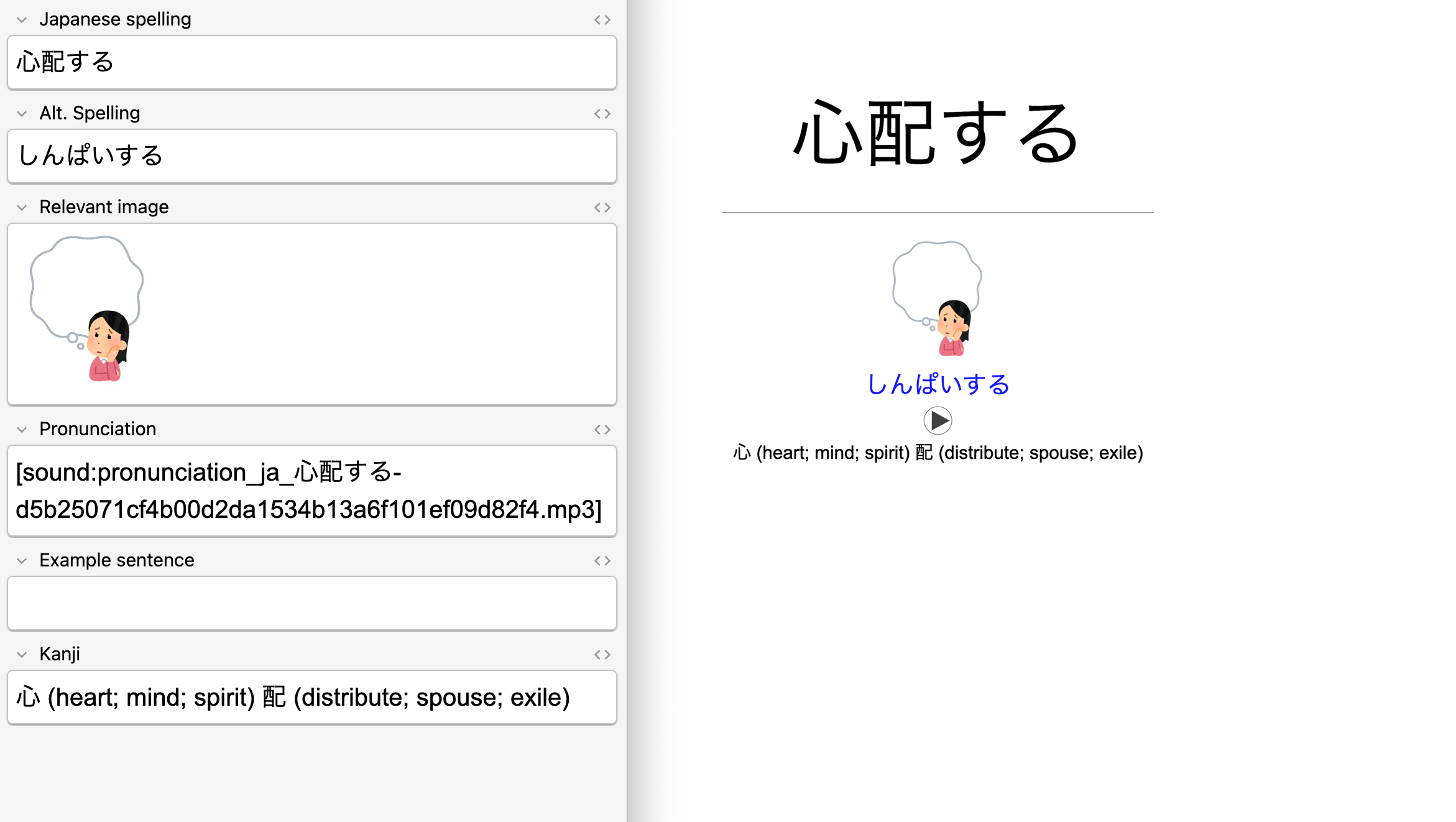
They’re tedious to make! I have Comprehension (words) and Vocabulary (sentences) cards, and each requires grabbing a photo, pronunciation, and often times a Kanji explanation.
I’ve gotten really good at typing with Japanese input (Romaji) and navigating jisho.org.
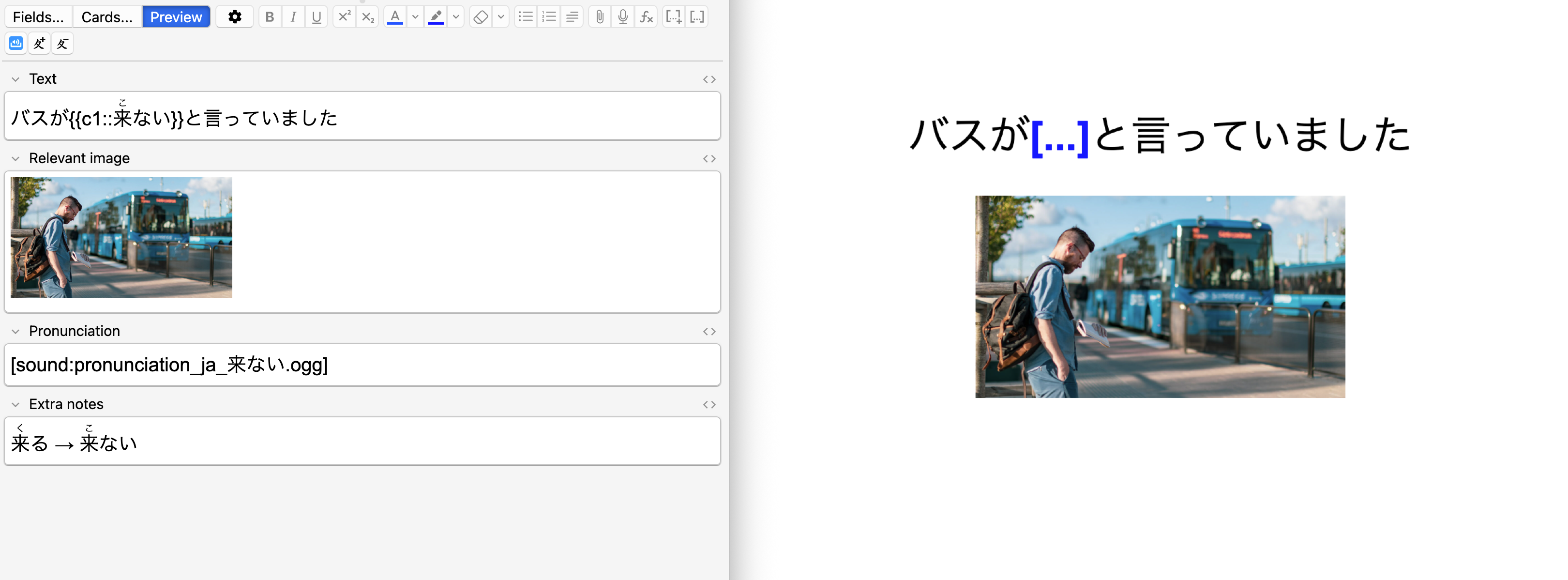
This tedium has led me to wonder — should I be automating this process? Should I go as far as to take a photo of my textbook and prompt really well to get it to generate cards for me? Should I wisprflow my sentences? Should I have a dialog with ChatGPT and have it produce cards from our conversation?
No.
There are lots of Rube Goldberg Machines I can throw at this problem, but I can say with confidence that I prefer to be “stuck” in “the past” for three reasons.
🔗 1. I am not bottlenecked on card creation
My daily review time has shot up (nearly tripled!) ever since introducing this nightly ritual. New cards show up frequently, so creating just 20 a day compounds into a nearly-overwhelming amount of material.
I have found 10 a day to be comfortable, maybe even bordering on too many. Creating these 10 is not very time consuming (only about 15-20 minutes), so the opportunity in front of me is not automating hours of work - it’s 15 minutes.
🔗 2. Creating cards solidifies my understanding from the get-go
There’s a stark contrast between the cards I make and the ones I download. The ones I make I often choose a photo from my library — a friend, a trip, a meal — before defaulting to google images.
My 標識 card has a traffic sign from one of my favorite neighborhoods in Tokyo. My お喋り card has an image of my friend Sona from one of our matcha walks around SoHo. I remember these cards very well and like when they pop up.
When these words show up in material I can recall them more easily than some of my initial bulk-imported words.
🔗 3. I enjoy making cards
I really enjoy 20 minutes away from my phone. I enjoy finding photos for cards. I like the way the pronunciations from forvo.com sound as I browse them to add to my cards.
I’m not cramming for the MCAT, I’m learning Japanese because it’s interesting to me.
Why would I automate that away?